
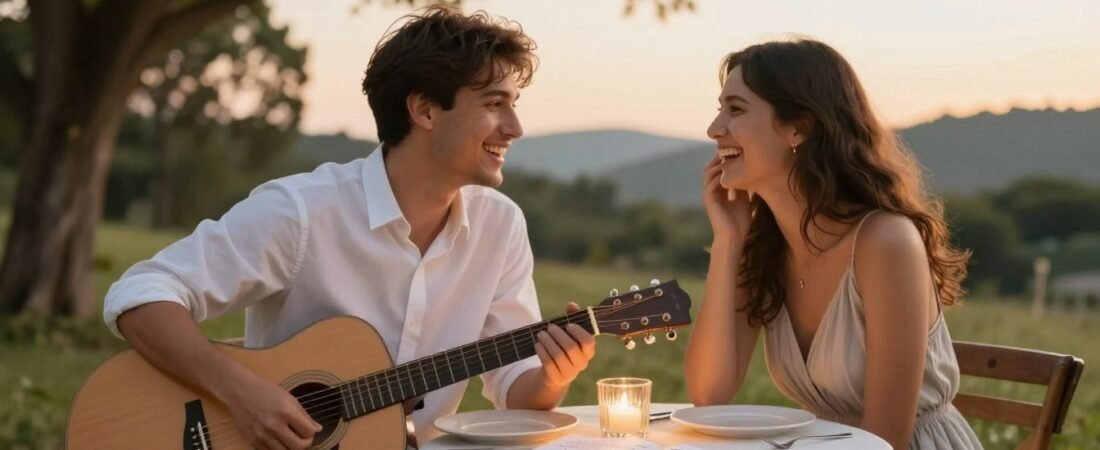
Can a single melody make the memory of your proposal unforgettable?
A personalized proposal song gives you a one-of-a-kind soundtrack that feels written just for you. It also makes the big question easier to deliver with calm and confidence. Live music can shape the moment, and performers can shift timing in real time for perfect pacing.
This guide outlines what a tailored musical idea looks like and what you’ll learn: relationship and music-style discovery; choosing format (live, recorded, playlist, music box); lyric inputs; logistics and backup plans; and a day-of run-of-show. Options range from a brand-new tune, a custom version of your song, or a playlist that ends with the proposal.
Plan in secret using a believable cover story and vendor cues. As Arnie Abrams notes, music can transport us back to precise feelings, making the memory last.
Key Takeaways
- A personalized musical moment creates a lasting emotional trigger.
- Three main formats: new composition, revised favorite, or staged playlist.
- Follow the step-by-step flow: discovery → format → lyrics → logistics → run-of-show.
- Keep the plan secret with cover stories and vendor coordination.
- Real-world examples include piano-bar requests, playlists, music boxes, and street setups.
Why music makes a marriage proposal unforgettable
Music fills the space and shapes the atmosphere. It helps both partners feel emotionally held instead of rushed by nerves. That care creates a calmer heart and clearer words during the big proposal.
Custom Proposal Song with Video Sample Clip

Live performance adds depth
Live music brings warmth and real-time response. Musicians can extend an intro, slow a tempo, or repeat a phrase so you can breathe, speak, and kneel without racing the clock.
Melodies lock memories
Hearing a tune later can instantaneously return you to that place, the light, and the look on your partner’s face. As Arnie Abrams notes, music transports us back to precise emotions, turning memory into a sensory moment.
Old favorite versus new composition
Pick “your song” when a track already marks a milestone—first date, road-trip anthem, or first dance practice. Choose a brand-new piece when lyrics should tell your story plainly. A good middle way uses the familiar melody but adds a short intro or a personalized lyric tag that leads into the question.
Music is a shared language that carries tenderness, especially if speaking feels hard. Let the melody hold the emotion while you say the words that matter most.
How to propose with a custom song without giving away the surprise
Careful secrecy and a clear plan turn a musical proposal into a deeply felt surprise.
Start planning by mapping your relationship story and partner style. List three to five songs tied to real milestones: first trip, calm track, dance-at-home, or a tear-jerker. Then pick the emotional tone—soft, joyful, cinematic, or playful.
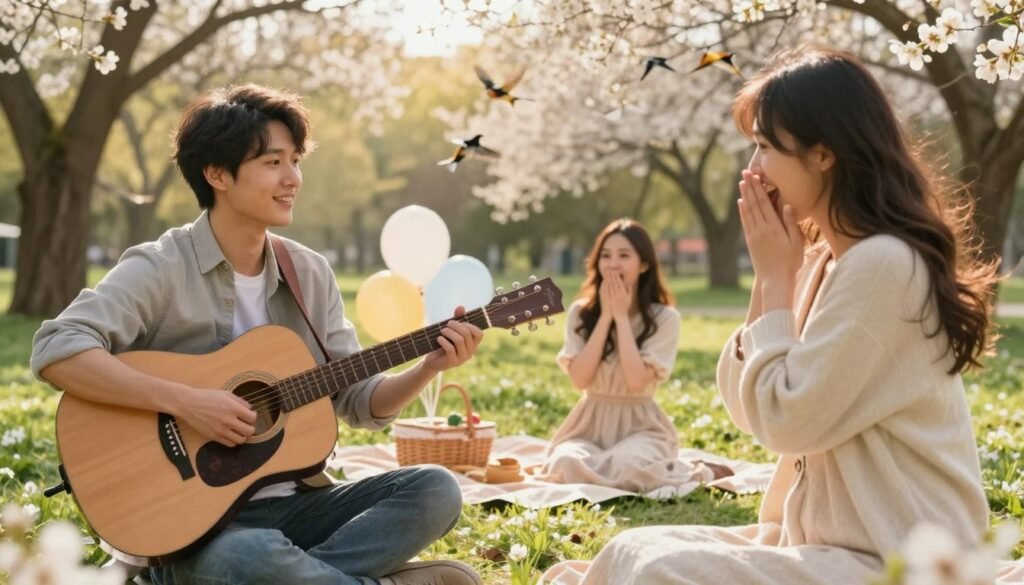
Choose the setting and backdrop
Match sound and place. A quiet garden or living room suits acoustic or recorded reveals. Rooftops, restaurants, or beaches support piano or strings but need wind, power, and access planning. A city backdrop can feel magical; plan for noise control and permits.
Pick a clear timing cue
Use cues that need no acting: “when the chorus starts,” “after the second verse,” or “on the final chord.” Share one cue with musicians and the photographer so everyone syncs naturally.
Create a believable cover story and coordination plan
Use a normal-sounding pretext: dinner, a scenic walk, holiday photos, or a museum visit. Set a pivot point where music begins without suspicion.
- Agree on a code-word text and one visual signal (watch adjust, look up).
- Decide who holds the ring, and how to avoid early arrivals.
- Build 10–15 minute buffers for parking, restrooms, and crowds.
“A thoughtful plan keeps your nerves low so the question feels effortless.”
| Setting | Best Sound | Key Concern | Quick Tip |
|---|---|---|---|
| Living room | Recorded or acoustic guitar | Space, surprise arrival | Use dim lighting and staged “photos” |
| Rooftop | Piano or strings | Wind, power, permits | Scout access and weather backup |
| Park or beach | Acoustic or portable speaker | Noise, crowds | Choose weekday mornings |
| Restaurant | Piano or small ensemble | Venue rules, timing | Coordinate staff and run-of-show |
Final note: Follow the plan, trust your signals, and let the music hold the atmosphere. A calm, rehearsed reveal creates the perfect proposal moment.
Personalized lyrics that feel true: turning your love story into words
A short set of true images and phrases gives a composer what they need to make the moment unmistakable.
Why personalized lyrics matter: Specific lines remove guesswork. They change a general love song into a clear message that says, “This is about us.” Musicians can then shape the melody so the big question sits on a breath, a pause, or a soft chord.
What to include so the lyrics sound like you
Use simple language and real markers: a trail name, a trip date, a shared phrase, or Sunday coffee. Keep details vivid but compact so recognition replaces an explanation.
Mini process for lyric inputs
- Nicknames and phrases you actually say.
- Three defining moments: first date spot, a trip, one hard chapter you overcame.
- What you admire most and a short promise for marriage.
| Input | Example | Why it works | Placement |
|---|---|---|---|
| Nickname | Short pet name | Instant recognition | Verse |
| Defining moment | Hiking trail name | Compact vivid cue | Pre-chorus |
| Promise | Simple promise line | Clear intent | Bridge |
| Proposal line | Will you marry me? | Direct, melodic focus | Final hook |
Fitting the question into music
Count syllables, place a pause before the line, and keep instruments sparse at that instant. Professional composers can add key changes, crescendos, or tempo flexibility to make the phrase land and replay across future moments, reinforcing memory.
Learn more: What Is a Personalized Song?
Choosing how the song is used during the proposal
Deciding between live players, a recorded track, a playlist, or a small music box will shape the whole moment. Each format has clear trade-offs in privacy, budget, and vibe.
Live musician flexibility
Live music works best when timing and emotional impact matter most. A pianist, guitarist, violinist, or duo can extend an intro, slow a tempo, or repeat a phrase so the kneel is perfectly timed.
Recorded reveal for private settings
Recorded tracks give control and privacy. Press play, let your partner hear personalized lyrics, then let the final line cue your question. This is ideal at home, in a hotel, or during a trip when intimacy is key.
Playlist with a surprise ending
Assemble 6–12 meaningful songs that map your story and finish with a brief voice memo that asks the question. Hide the phone, set volume, and let the playlist guide the emotional arc.
Music box or small speaker for low-tech romance
Small music boxes or portable speakers offer quiet, portable charm. Use a power bank, gentle volume, and a secluded spot—picnic clearing, overlook, or park bench—for an intimate musical proposal.
Adding a dance without making it a performance
Invite a short slow dance as a smooth transition rather than a show. Keep tempo comfortable, make it brief, and let the final step become the moment you kneel.
- Decision framework: live for impact, recorded for control, playlist for story, music box for intimacy.
- Public-but-not-spectacle options: piano bar request, coordinate a local street performer, or ask a restaurant musician for an instrumental version that won’t drown out your words.
Plan volume and clarity so your spoken proposal never competes with the music.
Planning the logistics: musicians, venues, budgets, and backup plans
Good planning makes musical moments feel effortless rather than stressful. This section lists practical items to hire, ask, and confirm so your proposal runs like clockwork.
Who to hire: solo piano for elegant hotel or restaurant backdrop; acoustic guitar for park or beach warmth; strings for formal wow; a duo (guitar + vocals or piano + violin) for fuller sound.
Questions that keep timing effortless
- Can you loop an intro or extend a phrase on cue?
- Will you watch for a hand signal and adjust volume?
- How do you handle late arrivals or sudden changes?
Budget and common add-ons
| Package | Typical Range (USD) | Included | Common Add-ons |
|---|---|---|---|
| Solo pianist | $300–$800 | Prep time, piano or keyboard | Travel $50–$200; weekend +10–25% |
| Acoustic duo | $500–$1,200 | Two players, basic arr. | Custom arrangement $100–$300; extra mic |
| String quartet | $800–$2,000 | Full ensemble, rehearsals | Transport, venue fees, permits |
Venue, outdoor, and coordination notes
Confirm venue policies and park permits in writing. For outdoor setups plan for wind, battery-powered keyboards or amps, and a covered backup nearby.
Share a simple run-of-show with your photographer and venue staff, pick one point person, and use a discreet code word. Book early: 3–6 months for booking and permits; 2–3 months final songs; 1 month rehearsals; week-of confirmations.
Plan B examples: same arrangement played from a phone, move indoors, or keep the song but change the backdrop.
Making the moment land: a run-of-show for the proposal day
A tight minute-by-minute plan helps the atmosphere feel natural and unhurried. Below is a simple template you can follow the day of the proposal.
- Arrival buffer (15 min) — guests, musician, and photographer arrive; brief checks.
- Positioning (5 min) — stand slightly behind and to the side of partner; keep foot traffic behind them.
- Signal and start (0–1 min) — give the musician a hand cue or press play for the intro.
- Intro & first verse (1–2 min) — soft underscoring while you speak a few calm words.
- Kneel & ask (0–1 min) — choose your cue: crescendo lift, lyric hook, or final chord.
- Pause for answer (30–60 sec) — musician holds a warm progression or drops to soft strings.
- Reprise & photos (3–5 min) — let the music return for celebration and portraits.
Tempo and length flexibility reduce nerves. Live players can stretch an intro, repeat a chorus if emotions swell, or hold a chord while you gather your words.
Ring moment choices: crescendo for impact, a lyric hook for clarity, or the final chord for cinematic silence. If you want clear recorded words, plan a soft instrumental gap before the question.
“One clear cue, one clear moment, one song that belongs to both of you.”
| Stage | What happens | Quick tip |
|---|---|---|
| Arrival | Final checks and buffer | Keep phone on silent |
| First notes | Atmosphere builds | Stand close, off-center |
| Ring moment | Ask the question | Choose crescendo or silence |
| After yes | Reprise and photos | Let music carry the hug |
For engagement song ideas consider classics like “Can’t Help Falling in Love,” “Perfect,” or “A Thousand Years.” Find more curated inspiration here: proposal & engagement songs.
Conclusion
End by turning ideas into one clear, calm timeline that keeps feeling first.
Follow the steps: pick the emotional tone, choose your familiar track or a new tune, select live music or recorded format, draft lyric inputs, lock logistics and backups, rehearse cues, and run the day-of plan.
Music makes the marriage proposal repeatable: every replay brings the same memory and warm feeling back, not just a record of the event.
Keep the surprise gentle and respectful. Use a believable cover story, pick a setting your partner prefers, and match the arrangement to their comfort level. One cue, one plan, one backup keeps timing easy and lets you stay present.
Next steps: browse engagement ideas, pick lyric personalization level, book musicians or order a recorded track, and confirm venue rules. Ready to order? Visit https://songgifted.com/shop/ to begin.
Remember: the goal is not a perfect performance but a simple, true promise — spoken clearly and framed by music that feels like home.